NHTSA Service Bulletin 11008323: 2003-2024 Mercedes Benz A 220
Official manufacturer communication context for 2003-2024 Mercedes Benz A 220, with affected products, buyer checks and links into Carchieve recall, problem and VIN research.
Reviewed June 2026 from NHTSA manufacturer communication and service bulletin records. Carchieve is independent and not affiliated with any vehicle manufacturer or government agency.
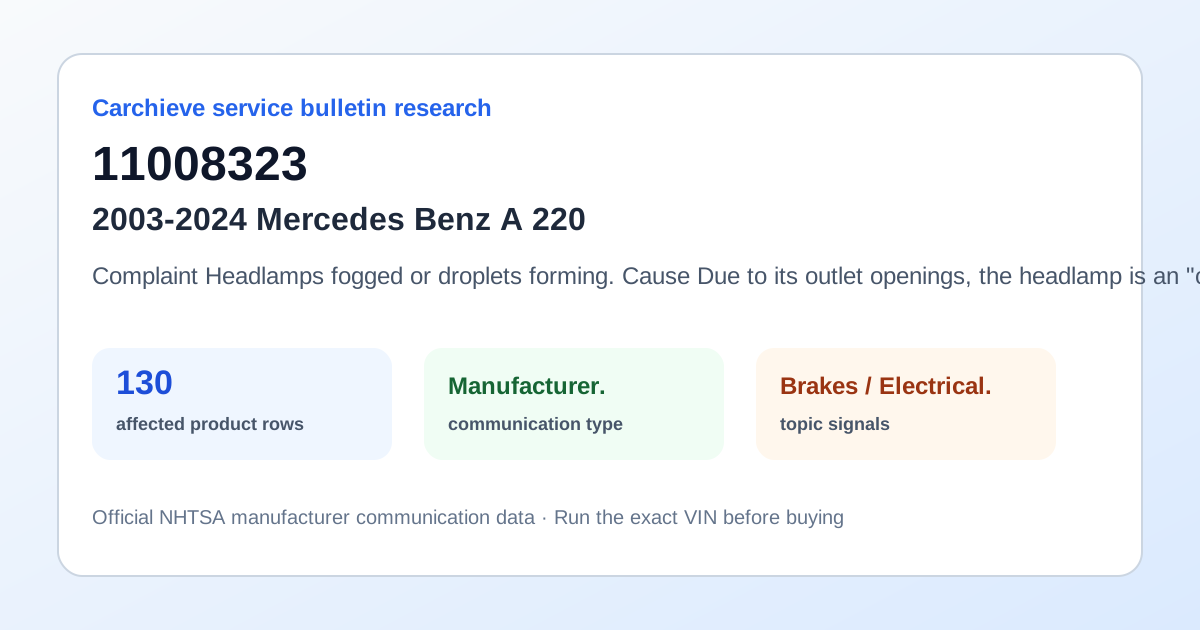
Complaint Headlamps fogged or droplets forming. Cause Due to its outlet openings, the headlamp is an "open system". This means that acidic gases, moisture, dirt and exhaust gases can penetrate into the headlamp. This can lead to the formation of condensation on the lens of the headlamp. The headlamps comply with all applicable US standards and regulations. Remedy Check housing cover of lamp unit for natural fogging or condensation as per LI82.10-P-078301. If a reduction in the degree of fogging is visible, the desiccant packs can be used once the condensation has completely evaporated. Note: Order service covers and desiccant packs based on the validity description. 1. Remove headlamps. 2. Remove all grommets from outlet openings. 3. Seal vent openings with sealing profile. Important: All openings must be sealed carefully for the pressure compensation diaphragm to work properly! 4. Remove existing service cover. 5. Place desiccant packs into the new service covers and bolt down (Picture_01). 6. Glue the new diaphragm onto the intended surface at the service cover (Picture_02). Note: The bonding surface must be clean and dry. 7. Attach service cover with desiccant pack at headlamp. 8. Install headlamp. To ensure that the desiccant pack (absorption) acts effectively, the headlamp has to be air-sealed. Observe or check the following points for this: 1. Seals at the central connector must all be present and correctly fitted (Picture_03). 2. The new transparent diaphragm must be correctly bonded (Picture_04). 3. Check headlamp housing for any external damage.
What this bulletin may mean before buying
Treat this as service research, not a verdict on one car. Before you buy, compare this communication with official recall campaigns, model-level owner complaint patterns, and the exact vehicle’s VIN-decoded specifications. A bulletin can help you ask a seller or dealer sharper questions about software updates, known repairs, warranty extensions and service history.
Affected products listed in this communication
Buyer checklist
- Run the 17-character VIN and confirm the year, make, model, engine and equipment match the listing.
- Check recall campaign pages for safety actions that may require dealer repair.
- Compare this bulletin with common problem pages for the same model and component area.
- Ask the seller or dealer whether the bulletin procedure, update or inspection has already been completed.
- Use the used-car buying checklist and get an independent inspection.
Frequently asked questions
What is NHTSA service bulletin 11008323?
Complaint Headlamps fogged or droplets forming. Cause Due to its outlet openings, the headlamp is an "open system". This means that acidic gases, moisture, dirt and exhaust gases can penetrate into the headlamp. This can lead to the formation of condensation on the lens of the headlamp. The headlamps comply with all applicable US standards and regulations. Remedy Check housing cover of lamp unit for natural fogging.
Is a service bulletin the same as a recall?
No. A recall is a safety campaign with a required remedy for affected VINs. A service bulletin or manufacturer communication usually describes diagnostic, repair, software, warranty or service information.
How should a used-car buyer use this bulletin?
Use it as a research signal. Compare it with recalls, owner complaints, service records, a VIN report and an independent inspection before buying.
Check the exact VIN before you buy
Model-level pages show public safety patterns. A full VIN report helps confirm the exact vehicle, decoded specs, recall applicability and buyer checks.
Get Full Report