NHTSA Service Bulletin 11029060: 2020-2026 Mercedes-benz Amg Gle63 S
Official manufacturer communication context for 2020-2026 Mercedes-benz Amg Gle63 S, with affected products, buyer checks and links into Carchieve recall, problem and VIN research.
Reviewed June 2026 from NHTSA manufacturer communication and service bulletin records. Carchieve is independent and not affiliated with any vehicle manufacturer or government agency.
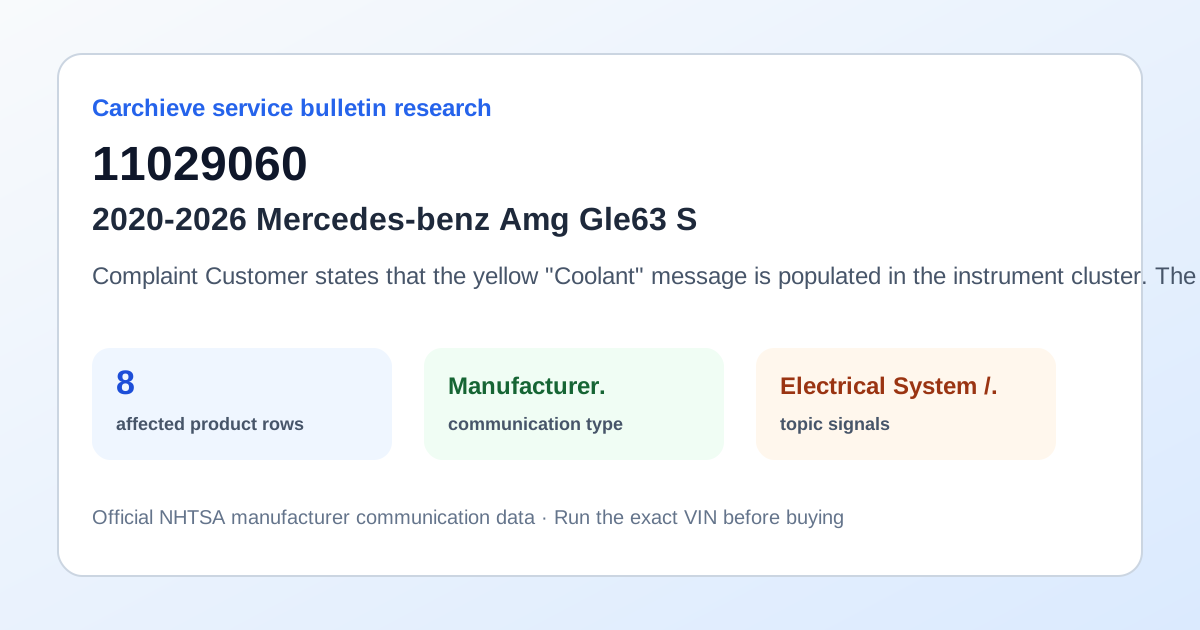
Complaint Customer states that the yellow "Coolant" message is populated in the instrument cluster. The following DTC is found stored in the PTCU: P2B2A7A - The speed of the 'Coolant pump' component part is too high. A leak or defective seal was detected Notes on fault code: The fault code concerns the right rear 15 W pump on the side of the transmission (Figure 1, position C). The fault code concerning the speed that is too high is set because of air in the system (emergency dry run function) IMPORTANT: This LI DOES NOT APPLY to model year 2024 and newer vehicles. For model year 2024 and newer vehicles pump PN's A0005009100 and A0005008900 are the correct pumps Cause Air in the low-temperature coolant circuit Remedy PLEASE READ ALL THE STEPS AND FOLLOW THEM IN ORDER. Step 1: With the engine cold, use Xentry to activate the two pumps at the passenger front. As they are running, remove the cap from the low temp cooling circuit reservoir and observe the coolant. If it overflows the reservoir, or blows out upon removal of the cap there is a restriction somewhere in the coolant lines. This can take the form of a physical restriction inside of one of the lines or pumps or a damaged or kinked hardline or rubber hose. Activate each pump in succession and listen to it using a stethoscope or by placing an ear to a screwdriver or other implement placed on the pump Compare the sound and feel of each pump. An improperly functioning, bled, or faulty pump will make a very distinct churning noise. The pumps should be near silent and should not vibrate or heat up. If you find a pump that is making more noise than the others it is most likely pulling in air from somewhere or is encountering a restriction (refer to the first point in this section) If nothing of note is found, proceed to step 2. Step 2: Disassemble underfloor paneling and wheel well interior trim at front right to gain access to the two low temperature pumps. Take note of or photograph the part number of the pump holder, along with the production date. Step 3: Check the installation position of the pumps at the front right of the low-temperature circuit (Fig. 1). Below are the correct specified part numbers at each location: Outer: A 000 500 5500 (Fig. 1, position A) Inner: A 000 500 3800 (Fig. 1; position B) If installation position is NOK, continue to step 4 If installation position is OK, skip to step 7 Step 4: Photograph the pump part numbers at the front right so that the QR-code/DMC code and the part number are visible and legible save the pictures and label them appropriately if a TIPS case is required in the future. Step 5: Replace the affected pump(s) (where the installed part number differs from the specified part number, see specified part number in step 3). Step 6: Use a vacuum bleeder to fill the cooling system of the low-temperature circuit. Step 7: Vent the cooling system of the low-temperature circuit using XENTRY. NOTE: The cooling system of the low-temperature circuit is vented in various stages. To start with, the pumps at front right are actuated at approx. 30%, then 50% and finally at 100%. At 100% actuation, the valve of the coolant circulating the pump at the side of the transmission is opened (Fig. 1; position C). Please ALWAYS observe the following points during the venting procedure: The front right pumps always run simultaneously. These pumps must NEVER be operated separately of each other for actuation or for test purposes. The pump at the rear of the transmission must run permanently after being actuated. If the pump only briefly starts-up and then stops again, it is in a so-called emergency dry run mode because there is too much air in the system. Please repeat the venting routine. If the rear pump at the side of the transmission remains in the emergency dry run mode, create a TIPS case, add the previously discovered findings to it and send it to the technical support team. See attachment for further instructions.
What this bulletin may mean before buying
Treat this as service research, not a verdict on one car. Before you buy, compare this communication with official recall campaigns, model-level owner complaint patterns, and the exact vehicle’s VIN-decoded specifications. A bulletin can help you ask a seller or dealer sharper questions about software updates, known repairs, warranty extensions and service history.
Affected products listed in this communication
Buyer checklist
- Run the 17-character VIN and confirm the year, make, model, engine and equipment match the listing.
- Check recall campaign pages for safety actions that may require dealer repair.
- Compare this bulletin with common problem pages for the same model and component area.
- Ask the seller or dealer whether the bulletin procedure, update or inspection has already been completed.
- Use the used-car buying checklist and get an independent inspection.
Frequently asked questions
What is NHTSA service bulletin 11029060?
Complaint Customer states that the yellow "Coolant" message is populated in the instrument cluster. The following DTC is found stored in the PTCU: P2B2A7A - The speed of the 'Coolant pump' component part is too high. A leak or defective seal was detected Notes on fault code: The fault code concerns the right rear 15 W pump on the side of the transmission (Figure 1, position C). The fault code concerning the speed.
Is a service bulletin the same as a recall?
No. A recall is a safety campaign with a required remedy for affected VINs. A service bulletin or manufacturer communication usually describes diagnostic, repair, software, warranty or service information.
How should a used-car buyer use this bulletin?
Use it as a research signal. Compare it with recalls, owner complaints, service records, a VIN report and an independent inspection before buying.
Check the exact VIN before you buy
Model-level pages show public safety patterns. A full VIN report helps confirm the exact vehicle, decoded specs, recall applicability and buyer checks.
Get Full Report