NHTSA Service Bulletin 11020807: 2015-2025 Mercedes Benz Amg C63
Official manufacturer communication context for 2015-2025 Mercedes Benz Amg C63, with affected products, buyer checks and links into Carchieve recall, problem and VIN research.
Reviewed June 2026 from NHTSA manufacturer communication and service bulletin records. Carchieve is independent and not affiliated with any vehicle manufacturer or government agency.
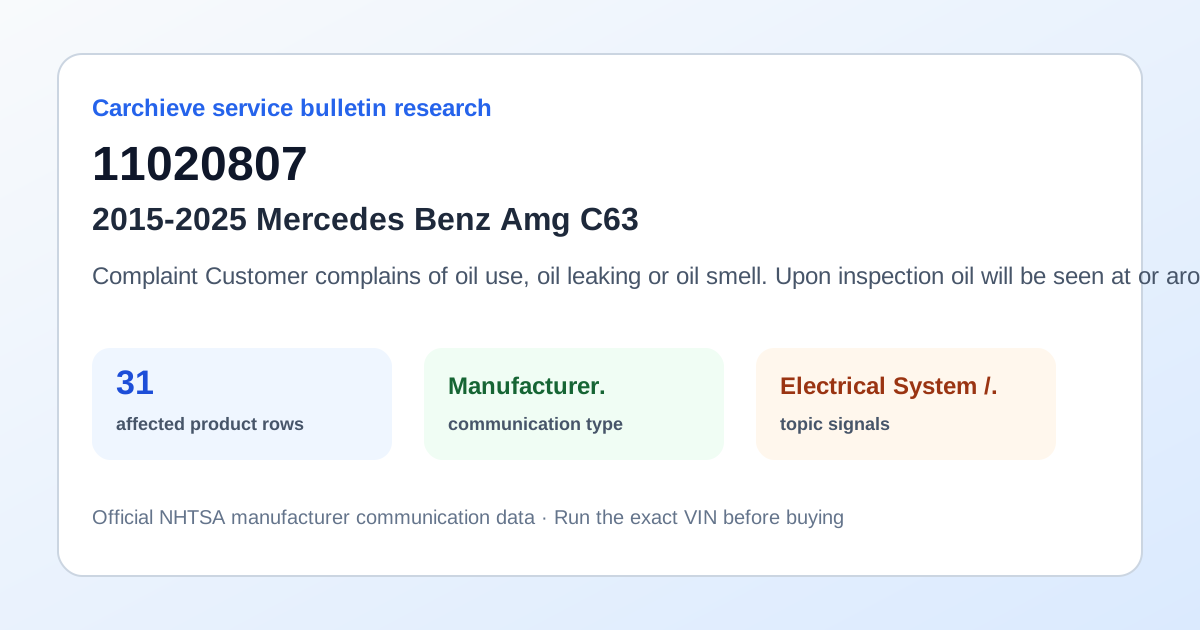
Complaint Customer complains of oil use, oil leaking or oil smell. Upon inspection oil will be seen at or around the rear of the engine and at the engine/transmission interface. Cause Oil leaking from rear main seal and/or rear main seal plate. Remedy If the rear main seal plate has been previously replaced per the instructions in this LI, open a TIPS case before proceeding. Inspect the rear main seal very carefully. Make sure the seal is not sucked in, rolled, or cut (see pictures in attachments). Confirm the leak location is at the rear main seal and/or rear main seal plate by cleaning the area thoroughly and applying trace powder to the suspected area. Allow the vehicle to run either on a lift or at low speed in a controlled environment (do not attempt at high speed or in wet areas as this will make the results difficult to assess). If the leak is emanating from the seal: replace both air/oil separators. Then clean the bellhousing area completely and test with trace powder again to see if the leak remains. If it doesn't, release the car. If the leak remains pull the rear main seal plate, clean the block mating surface completely and replace the rear main seal plate and rear main seal. When the new seal is installed make sure the sealant path is followed exactly as it is shown per the drawing in the attachments. Apply the sealant to the BLOCK instead of the plate to ensure adequate coverage is attained. After installation lubricate a feeler gauge with oil and run it between the rear main seal and the crank to clear any small debris that may be present and to break any binding or stiction.
What this bulletin may mean before buying
Treat this as service research, not a verdict on one car. Before you buy, compare this communication with official recall campaigns, model-level owner complaint patterns, and the exact vehicle’s VIN-decoded specifications. A bulletin can help you ask a seller or dealer sharper questions about software updates, known repairs, warranty extensions and service history.
Affected products listed in this communication
Buyer checklist
- Run the 17-character VIN and confirm the year, make, model, engine and equipment match the listing.
- Check recall campaign pages for safety actions that may require dealer repair.
- Compare this bulletin with common problem pages for the same model and component area.
- Ask the seller or dealer whether the bulletin procedure, update or inspection has already been completed.
- Use the used-car buying checklist and get an independent inspection.
Frequently asked questions
What is NHTSA service bulletin 11020807?
Complaint Customer complains of oil use, oil leaking or oil smell. Upon inspection oil will be seen at or around the rear of the engine and at the engine/transmission interface. Cause Oil leaking from rear main seal and/or rear main seal plate. Remedy If the rear main seal plate has been previously replaced per the instructions in this LI, open a TIPS case before proceeding. Inspect the rear main seal very.
Is a service bulletin the same as a recall?
No. A recall is a safety campaign with a required remedy for affected VINs. A service bulletin or manufacturer communication usually describes diagnostic, repair, software, warranty or service information.
How should a used-car buyer use this bulletin?
Use it as a research signal. Compare it with recalls, owner complaints, service records, a VIN report and an independent inspection before buying.
Check the exact VIN before you buy
Model-level pages show public safety patterns. A full VIN report helps confirm the exact vehicle, decoded specs, recall applicability and buyer checks.
Get Full Report